
CE & EN Compliance Guide

CE & EN Compliance Guide

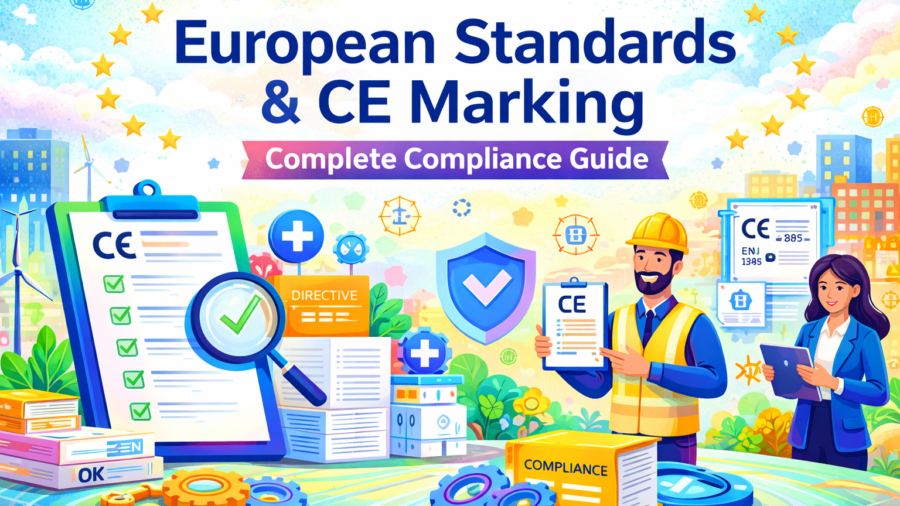
European Standards & CE Marking – Complete Compliance Guide 2025

Complying with EU regulations is essential for businesses selling products within Europe. European Standards (EN) provide the technical specifications that support legal compliance, ensure safety, and help products meet CE marking requirements.

This guide shows you, step by step, how to use EN standards to achieve CE compliance, including practical tips, checklists, and examples from multiple industries.

Whether you are a manufacturer, importer, or quality manager, this page will save you time, reduce legal risk, and simplify compliance.


What is CE Marking?

The CE mark is a declaration that a product meets EU safety, health, and environmental protection requirements.

  • Mandatory for certain product categories before they enter the EU market.
  • Indicates conformity with relevant European directives.
  • Supported by harmonized European Standards (EN).

Example: For machinery, compliance with EN ISO 12100 ensures CE marking under the Machinery Directive.


What Are European Standards (EN)?

European Standards (EN) are technical documents developed to ensure products, services, and systems meet consistent requirements.

  • Provide practical ways to comply with EU law.
  • Often referenced in EU directives as “harmonised standards”.
  • Voluntary in theory, but essential in practice — using EN standards provides a presumption of conformity.

Key takeaway: Using EN standards is the fastest, safest, and legally recognized path to CE marking.


How CE Marking and EN Standards Work Together

  1. Identify the applicable EU directive
    • Examples: Machinery Directive, Low Voltage Directive, Medical Device Regulation.
  2. Find relevant harmonised EN standards
    • Standards define technical specifications for safety, performance, and testing.
  3. Apply the standards in your design, manufacturing, and testing processes
    • Use the standards to guide product design, risk assessment, and quality control.
  4. Compile technical documentation
    • Include test reports, risk assessments, and evidence of compliance.
  5. Affix CE marking and declaration of conformity
    • Once compliance is verified, products can be sold in the EU legally.

Following EN standards gives automatic presumption of conformity, simplifying the CE marking process and reducing inspection risk.


Step‑by‑Step CE Compliance Checklist

Use this practical checklist for any product category:

  1. Identify applicable EU directives and regulations
  2. Determine which harmonised EN standards apply
  3. Implement standards in product design & manufacturing
  4. Conduct risk assessment & testing
  5. Prepare technical file / documentation
  6. Perform conformity assessment (internal or with notified body)
  7. Affix CE mark & issue Declaration of Conformity
  8. Maintain ongoing compliance and update for new EN revisions

Tip: Keep records of all EN standards applied — regulators often request documentation years after product release.


CE & EN Standards by Industry (High-Impact Examples)

Machinery

  • EN ISO 12100 – Risk assessment & design safety
  • EN 60204-1 – Electrical safety of machines
  • EN ISO 13849 – Safety-related control systems

Medical Devices

  • EN ISO 13485 – Quality management
  • EN ISO 14971 – Risk management
  • EN IEC 60601 – Electrical safety

Electrical & Electronics

  • EN 62368-1 – Audio/video & ICT equipment safety
  • EN 55032 / 55035 – EMC emission & immunity
  • EN 60335 – Household electrical appliances safety

Toys

  • EN 71 – Safety of toys
  • EN 62115 – Electrical toys
  • EN ISO 8124 – International toy safety alignment

These examples are exact, actionable, and cover high‑search industries.


Common Compliance Mistakes to Avoid

  • Using outdated standards
  • Applying standards incorrectly without reference to the relevant directive
  • Failing to document the technical file
  • Ignoring ongoing revisions of EN standards

Pro tip: Always check the official harmonised standards list on the European Commission website.


How to Access European Standards for CE Compliance

To ensure your CE marking is valid:

  1. Purchase or download standards from official sources like: european-standards.com
  2. Verify that the EN standard is current and harmonised
  3. Integrate it into your design, testing, and quality control processes

Using unofficial PDFs can be risky — always rely on official publications.


Frequently Asked Questions (FAQ)

Are European Standards mandatory for CE marking?

They are generally voluntary, but applying harmonised EN standards gives legal presumption of conformity, making CE marking easier.

How often are EN standards updated?

Typically every 3–5 years to reflect technological or regulatory changes.

Can I use ISO standards alone for CE marking?

Only if they are adopted as EN ISO standards and referenced by the relevant directive.

What documents should be in my CE technical file?

Risk assessment, product design, test reports, applied standards, user manuals, and Declaration of Conformity.

Outdated Standards Is Now a Compliance Violation

Using Outdated Standards Is Now a Compliance Violation

Most companies think compliance fails happen because of bad products.

That’s wrong.

In 2026, one of the most common reasons for audit failure is something far more invisible — and far more dangerous:

Using outdated EN or ISO standards.

No broken machines.
No unsafe materials.
Just the wrong version of the right standard.

And auditors no longer tolerate it.


The Silent Compliance Risk Nobody Talks About

Here’s the uncomfortable truth:

A product can be perfectly designed, well-tested, and responsibly manufactured — and still be non-compliant.

Why?

Because it references:

  • A withdrawn EN standard
  • A superseded ISO version
  • A standard that was harmonised years ago
  • Documentation based on an obsolete conformity presumption

On paper, it looks compliant.
Legally, it isn’t.


Why Outdated Standards Are a Legal Problem Now

This wasn’t always enforced strictly.

But in 2026, three things changed:

  1. EU market surveillance tightened
  2. Digital audits track version numbers
  3. Harmonised standards updates accelerated

Using an outdated standard means:

  • Loss of presumption of conformity
  • Invalid technical documentation
  • CE marking at risk
  • Immediate corrective actions
  • Potential market withdrawal

Auditors don’t argue this anymore. They document it.


“But We Were Certified Years Ago” — The Most Dangerous Sentence

Certification does not freeze time.

Standards evolve.
Risks change.
Requirements update.

If your company:

  • Keeps old PDFs
  • Reuses legacy compliance files
  • Copies previous declarations
  • Doesn’t track standard revisions

Then your compliance is already drifting.

Many companies only discover this during:

  • A surprise audit
  • A customer compliance review
  • A customs inspection
  • A product incident investigation

At that point, it’s too late.


How Auditors Detect Outdated Standards Instantly

This isn’t guesswork anymore.

Auditors check:

  • Standard publication year
  • Amendment history
  • Withdrawal dates
  • Harmonisation status
  • References in DoC and test reports

If your documentation cites EN ISO 12100:2010 when a newer harmonised version exists, you are exposed — even if the technical content seems similar.

Compliance is version-specific.


Common Myths That Get Companies in Trouble

❌ “The old version is almost the same”
❌ “No one told us it changed”
❌ “We passed last year”
❌ “It’s still widely used”
❌ “We updated later”

None of these protect you legally.

Only current, valid standards do.


The Real Compliance Rule for 2026

Here’s the rule auditors apply now:

If a standard is withdrawn, replaced, or no longer harmonised — it cannot be used to claim compliance.

Simple. Brutal. Enforced.


How Companies Must Protect Themselves Now

Serious companies now:

  • Track standards updates continuously
  • Control internal access to standards
  • Eliminate shared PDF libraries
  • Align documentation with current versions
  • Update risk assessments when standards change

Compliance is no longer a document — it’s a living system.


Final Warning: This Is Where Most Fail

Most compliance failures in 2026 won’t come from unsafe products.

They will come from outdated standards quietly sitting inside technical files.

If you don’t know exactly:

  • Which standards you use
  • Which versions are valid
  • Which are harmonised today

Then your compliance is already at risk.

How to Legally Share Standards Across Your Company

How to Legally Share Standards Across Your Company

I’ve seen this mistake more times than I can count.

A company buys an important standard. One PDF. One licence. And suddenly it’s emailed, uploaded to shared drives, copied into folders, and passed around like an internal memo. Everyone means well — but legally? It’s a ticking time bomb.

Sharing purchased standards is allowed, but only if you do it the right way. And if you don’t, the legal and financial risks can be far bigger than most companies realise.

Let me walk you through how to do it properly — with real examples, practical tips, and honest opinions from someone who’s seen both sides.


First: Understand What You’re Actually Buying

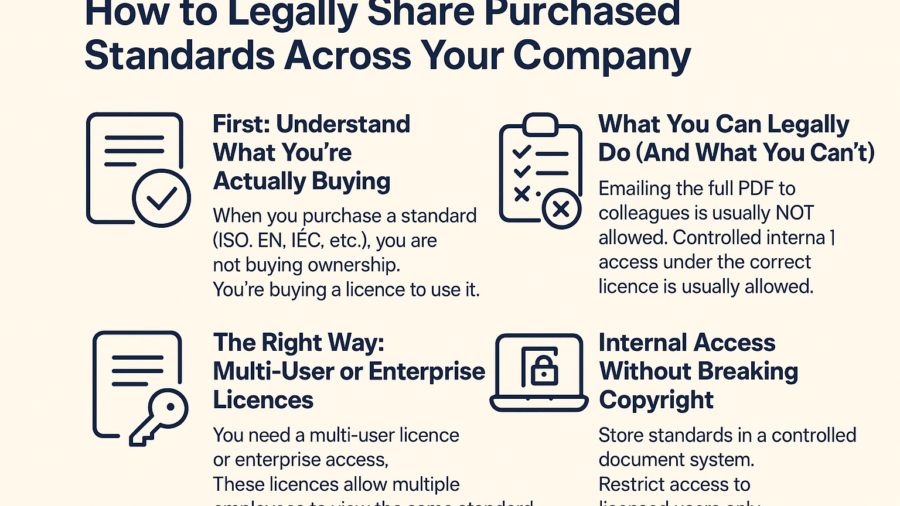
When you purchase a standard (ISO, EN, IEC, etc.), you are not buying ownership. You’re buying a licence to use it.

That licence defines:

  • Who can access it
  • How many users are allowed
  • Whether copies are permitted
  • If internal distribution is restricted

Most standards are published by organisations like International Organization for Standardization, and they are protected by copyright just like books or software.

My opinion: This is where most compliance problems start — not with bad intent, but with bad assumptions.


What You Can Legally Do (And What You Can’t)

Let’s make this very clear.

❌ What is usually NOT allowed

  • Emailing the full PDF to colleagues
  • Uploading standards to shared drives or intranets
  • Printing multiple copies from a single-user licence
  • Sharing standards with contractors or partners

✅ What is usually allowed

  • Controlled internal access under the correct licence
  • Referencing clauses without reproducing full content
  • Training employees on requirements (not distributing text)
  • Centralised access via approved platforms

The key word here is licensing, not sharing.


The Right Way: Multi-User or Enterprise Licences

If more than one person needs access, the solution is simple — but often ignored.

You need a multi-user licence or enterprise access.

These licences allow:

  • Multiple employees to view the same standard
  • Access from different departments
  • Auditable usage tracking

Yes, they cost more upfront. But they cost far less than:

  • Legal disputes
  • Compliance failures
  • Reputation damage

Honest take: If a standard is critical to your operations, treating it like a disposable PDF is reckless.


Practical Example: Engineering vs Quality Teams

Let’s say:

  • Engineering needs ISO technical requirements
  • Quality needs audit and compliance clauses
  • Procurement needs supplier-related sections

Wrong approach: One person buys the standard and shares it internally.
Correct approach: One licence with controlled access for all relevant teams.

You stay legal, everyone stays informed, and audits become smoother.


Internal Access Without Breaking Copyright

Here’s a smart and legal workaround many companies use:

  • Store standards in a controlled document system
  • Restrict access to licensed users only
  • Disable downloads if required
  • Log access for audits

This works especially well for regulated industries where traceability matters.

My view: If your compliance system can’t manage licensed documents properly, the system is the problem — not the standards.


Training Is Not the Same as Distribution

This is important and often misunderstood.

You can:

  • Create internal training materials
  • Explain requirements in your own words
  • Use summaries, flowcharts, and checklists

You cannot:

  • Copy-paste large sections of the standard
  • Reproduce tables or annexes verbatim

Smart companies translate standards into processes, not PDFs.


What About Auditors and External Consultants?

Another common trap.

Auditors usually:

  • Bring their own licensed copies
  • Reference clauses without distributing content

If an auditor asks for your internal copy, that’s a red flag — for them, not you.

Rule of thumb: Never share your licensed standards outside the organisation unless the licence explicitly allows it.


Why This Matters More Than Ever

With increasing focus on compliance, intellectual property, and governance, standards publishers are becoming stricter — and audits more frequent.

Companies that ignore licensing:

  • Risk financial penalties
  • Undermine their compliance credibility
  • Look careless during audits

Companies that do it right:

  • Move faster
  • Train better
  • Pass audits with confidence

Compliance Starts With Respect

Standards exist to improve quality, safety, and trust. Ignoring their licensing rules contradicts everything they stand for.

If a standard matters enough to guide your business, it matters enough to license properly.

Do it once. Do it right. And turn compliance into a strength — not a silent risk.

How AI Will Change Compliance & Standardisation

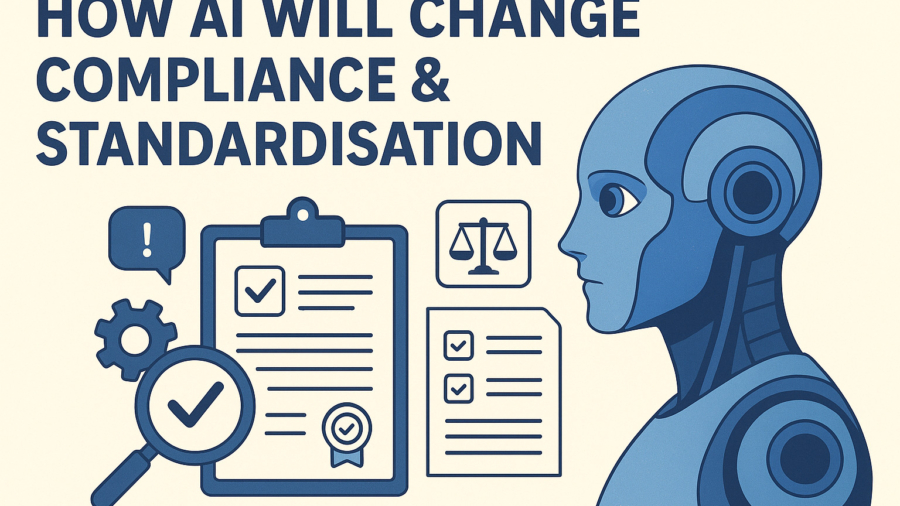
How AI Will Change Compliance & Standardisation

I’ll be honest: for years, compliance and standardisation felt like the most boring parts of any business. Necessary, yes. Inspiring? Not at all. Endless documents, audits that arrive too late, rules that change faster than anyone can track.

But AI is about to flip that story completely.

Not in a futuristic, sci-fi way — but in a very real, practical, everyday way that will change how companies work, how standards are applied, and how people experience compliance itself.

Compliance Will Stop Being Reactive

Right now, most compliance systems work backwards. A rule is broken, an audit finds it, a fine arrives, and only then does something change.

AI changes that logic.

With intelligent monitoring, compliance becomes predictive instead of reactive. AI systems can detect unusual patterns, flag risks early, and warn teams before a regulation is violated. This means fewer surprises, fewer penalties, and far less stress for everyone involved.

From my point of view, this alone will redefine how companies think about compliance — not as damage control, but as risk prevention.

Standards Will Become Living Systems

Traditional standards are static documents. PDFs that sit on servers, rarely read, often misunderstood.

AI turns standards into living frameworks.

Instead of asking, “Are we compliant with this standard?”, businesses will ask, “How compliant are we right now — and what needs to change today?” AI can interpret complex standards, translate them into actionable steps, and update guidance automatically when regulations evolve.

That’s powerful. It means standardisation finally keeps pace with reality.

Less Bureaucracy, More Human Judgment

One of my biggest frustrations with compliance has always been bureaucracy for the sake of bureaucracy. Checklists without context. Rules without logic.

AI handles the repetitive, mechanical tasks — data checks, document reviews, reporting — so humans can focus on judgment, ethics, and decision-making.

Compliance professionals won’t disappear. They’ll become more strategic, more respected, and more involved in shaping how organisations behave, not just how they report.

Global Compliance Will Actually Be Possible

Operating across countries is a compliance nightmare. Different laws, different standards, different interpretations.

AI makes cross-border compliance scalable. It can map local regulations against global standards, highlight conflicts, and adapt policies for each market automatically. For international companies, this isn’t just helpful — it’s transformational.

Transparency Will Increase (Whether Companies Like It or Not)

AI thrives on data, and data leaves trails.

This means compliance will become more transparent by default. Regulators, partners, and even customers will expect clearer proof that standards are being followed. Companies that embrace AI-driven compliance will build trust faster. Those that don’t will struggle to explain themselves.

In my opinion, this pressure is a good thing. It rewards honest businesses and exposes weak practices early.

The Real Shift: Compliance as a Competitive Advantage

Here’s the biggest change of all — and the one most people still miss.

Compliance and standardisation won’t just be obligations anymore. They’ll be competitive advantages. Faster certifications, smoother audits, stronger trust, and better decision-making will separate leaders from laggards.

AI doesn’t remove responsibility. It amplifies it.

How to Access EN & ISO Standards Legally

How to Access EN & ISO Standards Legally in 2026

If you work with product compliance, you already know one uncomfortable truth: EN and ISO standards are not freely available.
And yet, every manufacturer, importer, and exporter needs them to stay compliant in 2026.

The problem?
There’s a lot of confusion – and even misinformation – about how to access these standards legally, safely, and affordably.

So today, I’ll walk you through the official, legal, and smart ways to get EN and ISO standards without falling into risky websites or outdated PDFs.

This guide is simple, practical, and written for real companies that need real solutions.

Why EN & ISO Standards Aren’t Free

Let’s clear the air.

European Standards (EN) and international standards (ISO) are developed by expert committees involving:

  • engineers
  • regulators
  • laboratories
  • industry specialists

This process costs money — a LOT of money — and that’s why the final documents are commercial products protected by copyright.

👉 So downloading “free PDF versions” from random websites is illegal
… and can lead to:

  • compliance penalties,
  • outdated documentation,
  • and even blocked CE certifications.

In 2026, with digital compliance audits increasing, using verified sources has become essential.

The Three Legal Ways to Access EN and ISO Standards

1. Buy Directly From Official National Standardization Bodies

Every country has its own national body:

  • BSI (UK)
  • DIN (Germany)
  • AENOR (Spain)
  • AFNOR (France)

They sell official versions in PDF or printed form.

This is the most traditional path — reliable but often expensive.

2. Access Standards Through Licensed Digital Platforms

For companies working with many standards, digital access is the new norm.

Licensed platforms offer:

  • instant downloads
  • unified access
  • updates when standards change
  • multi-user permissions

One of the most recognized platforms for 2026 is Genorma, which provides:

  • original EN standards
  • harmonized standards
  • ISO documents
  • consolidated versions
  • alerts for future revisions
  • structured compliance information

These platforms are especially useful for:

  • manufacturers,
  • exporters,
  • conformity assessors,
  • and regulatory teams who need fast, accurate updates.

3. Use Standards Through Official Libraries or Institutional Subscriptions

Some universities, research centers, and corporate libraries offer on-site access to EN and ISO documents.

This is legal — but limited:

  • You cannot redistribute
  • You cannot download freely
  • You cannot use them for commercial publication

Useful for quick checks, not for continuous compliance work.

What You MUST Avoid in 2026

This part is critical.

Free PDF websites

They are illegal and most documents are outdated or modified.

❌ “Almost free” bundles from unknown sellers

If you get audited and your version is unofficial:
your CE documentation becomes invalid.

❌ Old versions found on forums or shared by suppliers

Standards change every year.
Using an old version can lead to regulatory failure — or even product recalls.

How to Choose the Right Access Method for Your Company

Here’s a simple rule I always tell manufacturers:

👉 If you use fewer than 5 standards a year → Buy individually

👉 If you use more than 5 → Use a licensed digital platform

👉 If you want occasional checks → Use institutional access

This alone can save thousands of euros per year while keeping compliance perfect.

Why 2026 Is a Turning Point for Digital Standards

This year, the EU is pushing:

  • AI-driven conformity assessment
  • paperless compliance
  • digital identity for manufacturers
  • harmonized online documentation

This means companies need:
✔ fast access
✔ updated documents
✔ accurate versions
✔ secure storage

Digital platforms and official downloads are becoming indispensable.

FAQ

Are EN and ISO standards free?

No. They are protected by copyright. Only summaries are free.

Is it illegal to download free versions online?

Yes. Unofficial PDFs violate copyright and can invalidate compliance documentation.

Where can I buy official standards?

From national bodies (BSI, DIN, AENOR, AFNOR) or licensed platforms like Genorma.

Can I use an old version of a standard?

Not for compliance. CE marking must follow the latest harmonized or applicable version.


Compliance Starts With Legal Access

In 2026, compliance isn’t just about passing a test — it’s about showing that every document you use is official, current, and legally obtained.

If you want smooth CE certification, reliable audits, and global market access…
start with the right access to EN and ISO standards.

Your reputation — and your product’s future — depends on it.

Why European Standards Are Becoming the World’s Benchmark

Why European Standards Are Becoming the World’s Benchmark

Europe Is Quietly Setting the Rules for the World – And 2026 Is the Turning Point

Something extraordinary is happening in the global compliance landscape:
European standards are no longer just regional requirements – they’re becoming the blueprint for worldwide regulation.

From machinery to medical devices, electronics to construction materials, Europe’s approach to safety and sustainability is so advanced that manufacturers outside the EU now adapt voluntarily, just to remain competitive.

2026 will accelerate this trend dramatically.

Here’s why Europe is shaping the future of global standards – and what it means for businesses everywhere.

1. Europe Leads in Sustainability Rules – Others Are Catching Up

The EU has positioned itself as the world’s toughest regulator when it comes to environmental protection.

In 2026, Europe will introduce:

  • Mandatory eco-design principles
  • Stricter energy-efficiency thresholds
  • Full material-traceability documentation
  • Circular-economy criteria across major industries
  • Lifecycle environmental impact reporting

Countries in Latin America, Asia, and the Middle East are already preparing similar frameworks.

Europe is not following trends – Europe creates them.

2. European Consumer Safety Standards Are the Most Trusted Globally

EN standards linked to CE marking are internationally recognized for:

  • High testing rigor
  • Clear technical documentation requirements
  • Strong conformity-assessment procedures
  • Transparent post-market surveillance

Manufacturers around the world often adopt EN rules even when not legally required, because they:

  • Reduce product recalls
  • Improve market credibility
  • Build trust with distributors and retailers

In many sectors, “complies with European standards” has become a selling point.

3. ISO Standards Are Being Rewritten to Mirror European Approaches

ISO is global, but Europe influences a significant percentage of ISO technical committees.

In 2026, many new ISO revisions will incorporate:

  • EU-style risk assessments
  • Sustainability indicators
  • Safety-by-design principles
  • Material-compliance reporting
  • Cybersecurity layers for connected products

The result?
Products built to European requirements automatically meet or exceed global expectations.

4. Cybersecurity Requirements Are About to Reshape Global Manufacturing

The upcoming EU Cyber Resilience Act is the first regulation in the world to impose:

  • Secure-by-design obligations
  • Mandatory vulnerability monitoring
  • Firmware-update transparency
  • EN-based cybersecurity testing
  • Penalties for insecure connected products

Other regions are expected to mirror this model.

When Europe raises the bar, the world adjusts.

5. The Hidden Reason: Europe’s Harmonized System Is Easier to Follow

Unlike other markets, Europe has something extremely powerful:

  • EN standards harmonized with legislation
  • Direct links to CE marking
  • Centralized rules applied across all 27 EU countries

This makes the European system:

  • Predictable
  • Transparent
  • Legally coherent
  • Easier to scale across multiple markets

And manufacturers love predictability.

6. What 2026 Means for Businesses Outside the EU

In a global supply chain, no manufacturer works alone.

If a European distributor demands EN or ISO compliance, every supplier – even outside the EU — must follow.

By 2026:

  • More global retailers will require European-level conformity
  • More suppliers will shift to EN standards to remain competitive
  • More countries will update national rules to align with EU expectations
  • ISO standards will integrate EU-style sustainability and safety frameworks

Europe is shaping the digital, environmental, and safety expectations of the entire market.

7. How Companies Can Future-Proof Their Products Before 2026

✔ Adopt EN standards early

Even if not mandatory in your region, they give you a competitive advantage.

✔ Use official, updated standards

Reliable platforms like Genorma.com provide verified EN and ISO documents.

✔ Invest in eco-design and lifecycle analysis

Sustainability will define approvals, partnerships, and customer trust.

✔ Prioritize cybersecurity

Every connected product must be secure by design – no exceptions.

✔ Train your compliance teams

2026 will reward companies that anticipate change, not react to it.

Europe Is Becoming the Global Rulemaker – Don’t Get Left Behind

As 2026 approaches, Europe is not just updating its standards.
It is redefining how the world understands safety, sustainability, and product responsibility.

Whether you manufacture in Barcelona, São Paulo, New Delhi, or Dubai, European standards will influence your future.

Businesses that act now will lead.
Businesses that wait will struggle to catch up.

The Future of Standards in Europe

The Future of Standards in Europe 2026: EN & ISO Trends

The Future of Standards in Europe 2026: EN & ISO Trends

European industries are entering a decisive phase. In 2026, new EN and ISO standards will reshape how manufacturers design, test, and certify products — from AI-controlled machinery to sustainable materials.
If you work in manufacturing, import/export, or product compliance, this guide will help you prepare for the next big wave of regulations — and turn compliance into competitive advantage.


🌍 Why 2026 Will Be a Turning Point

Several global forces are converging:

  • EU Green Deal & Circular Economy rules are pushing stricter environmental requirements.
  • Digital transition (Industry 5.0) introduces data-driven manufacturing and cybersecurity challenges.
  • Post-pandemic supply-chain policies demand higher traceability and product transparency.

Together, they are driving the release of more than 300 new or revised EN and ISO standards in 2025–2026, directly affecting CE marking and European market access.


🧩 Key Upcoming Standards to Watch

StandardFocus AreaWhy It Matters
EN ISO 14068-1Climate neutralityIntroduces clear criteria for carbon-neutral claims.
ISO 59020Circular economy — measuring circularityWill guide companies in reporting resource efficiency.
EN IEC 63365Safety of AI-based machineryDefines risk-assessment requirements for intelligent automation.
ISO 37305Compliance management systemsReplaces fragmented guidance, aligning governance and ethics.
EN 17687Recycled plastics traceabilityKey for packaging and food contact materials in the EU.

(Sources: CEN/CENELEC draft programmes, ISO/IEC committees, Genorma updates.)


⚙️ What This Means for CE Certification

The CE mark remains the golden passport to the European market. But harmonised EN standards under each EU directive (Machinery, Toy Safety, Low Voltage, Medical Devices, etc.) are being revised.
Manufacturers should:

  1. Check if harmonised EN versions are being replaced — using platforms like Genorma.com.
  2. Start transition testing early — some standards will have 12–24-month grace periods.
  3. Update Declarations of Conformity to reference new standard versions before enforcement deadlines.

Early adoption gives you smoother audits and fewer market-surveillance risks.


🌱 Sustainability Is Becoming Mandatory

Environmental performance will no longer be optional.
By 2026:

  • EN ISO 14060 series will require transparent climate data in product documentation.
  • EN 45555–45559 will set rules for product reparability, durability, and recyclability.
  • New ecolabel standards will link design, packaging, and transport emissions into one lifecycle score.

Companies embracing sustainability standards early will win contracts with public administrations and ESG-focused investors.


🔐 Digitalisation & Cybersecurity Standards

As factories become smarter, ISO/IEC 27001, EN ISA/IEC 62443, and new EN AI safety standards are defining the digital backbone of manufacturing.
From robotics to IoT, upcoming rules will ensure data integrity and prevent cyber incidents across production lines.
Integrating these standards today will future-proof your operations — and build trust with EU clients and notified bodies.


📊 Practical Action Plan for 2025–2026

  1. Audit your current compliance map — identify which EN/ISO versions you’re using.
  2. Follow new draft standards via CEN, ISO, or Genorma alerts.
  3. Train staff on upcoming requirements — especially environmental and digital.
  4. Update supplier contracts to include conformity with future EN and ISO versions.
  5. Plan your CE re-certification budget early — switching versions takes time and money.

💡 Why Early Movers Win

Brands that adopt upcoming standards before they become mandatory enjoy:

  • Stronger SEO visibility (yes, people search your compliance topics!)
  • Faster market access under CE and UKCA systems.
  • Higher credibility with clients and regulators.
  • Reduced recall risk due to outdated compliance files.

EN vs ISO Standards

EN vs ISO Standards: Key Differences Explained

Discover the main differences between EN and ISO standards. Learn how they work, why both matter, and how to access official versions on Genorma.com.


What Are EN and ISO Standards?

If you manufacture, import, or distribute products in Europe, you’ve likely seen both EN and ISO standards on documentation.
But what’s the real difference between them — and why are both important for compliance?

In simple terms:

  • ISO standards are international — recognized worldwide.
  • EN standards are European — adopted specifically for the European Union (EU) and EFTA countries.

Both systems ensure safety, quality, and interoperability, but they serve slightly different purposes within the global regulatory framework.


Understanding ISO Standards

The International Organization for Standardization (ISO) develops standards used across the world to unify industrial, environmental, and safety practices.

Key Facts About ISO Standards

  • Created and published by ISO, an independent international body.
  • Aim to harmonize technical specifications globally.
  • Cover almost every sector: manufacturing, healthcare, energy, IT, and more.
  • Examples:
    • ISO 9001 – Quality Management Systems
    • ISO 14001 – Environmental Management
    • ISO 45001 – Occupational Health and Safety

ISO standards help businesses demonstrate that their products or services meet international best practices.


Understanding EN Standards

EN stands for European Norm (Norme Européenne).
These are European standards developed or adopted by European organizations such as CEN, CENELEC, or ETSI.

Key Facts About EN Standards

  • Mandatory across EU member states once published as an EN standard.
  • Ensure compliance with European directives and regulations (e.g., CE marking).
  • Often derived from ISO or IEC standards — but adapted for European law.
  • Examples:
    • EN 1090 – Structural Steel and Aluminum
    • EN 60601 – Medical Electrical Equipment
    • EN 71 – Safety of Toys

Once adopted, EN standards replace all conflicting national standards across Europe (for example, BS, DIN, or NF standards).


The Relationship Between EN and ISO Standards

Many standards are jointly developed by ISO and CEN under the Vienna Agreement, allowing for global and European harmonization.

For example:

  • EN ISO 9001 means it’s both an ISO and EN standard, recognized worldwide and mandatory in Europe.
  • It combines the global methodology of ISO with the legal compliance of EN in the EU.

In other words, “EN ISO” versions ensure you meet both international and European market requirements simultaneously.


EN vs ISO Standards: Main Differences Table

FeatureEN StandardsISO Standards
ScopeEuropean Union and EFTAGlobal, international
PublisherCEN, CENELEC, or ETSIInternational Organization for Standardization
Legal RelevanceLinked to EU directives (mandatory)Voluntary, unless adopted locally
AdoptionReplaces national standards in EuropeVoluntary adoption by countries
ExamplesEN 71, EN 60601, EN 1090ISO 9001, ISO 14001, ISO 45001
Dual RecognitionEN ISO = both European and InternationalISO = International only

When to Use EN vs ISO Standards

  • If your business operates only within Europe, follow EN standards to ensure CE marking compliance.
  • If your company sells worldwide, use ISO standards as your foundation for global trade.
  • For best results, use EN ISO standards, which cover both regulatory regions.

Where to Buy or Download EN and ISO Standards

To ensure legal and technical compliance, always use official and up-to-date standards.
You can easily search, buy, or download EN, ISO, and EN ISO standards from Genorma.com, one of Europe’s most trusted sources for official publications.

Popular examples include:

  • EN ISO 9001 – Quality Management Systems
  • EN ISO 14001 – Environmental Management
  • EN 60601 – Medical Electrical Equipment
  • EN 1090 – Structural Steel and Aluminum

Why Understanding the Difference Matters

Choosing between EN and ISO standards can determine:

  • Whether your product can be sold in the EU
  • Which testing and certification process you must follow
  • Your company’s credibility and international recognition

In short, ISO helps you compete globally, while EN ensures your success in Europe.
Manufacturers seeking both advantages should focus on EN ISO standards, the true bridge between global innovation and European regulation.

How to Get CE Certification

How to Get CE Certification: Step-by-Step Guide for Manufacturers

What Is CE Certification and Why It Matters

CE certification is the key passport to sell products within the European Economic Area (EEA). The CE mark demonstrates that a product complies with all European safety, health, and environmental protection requirements.

Whether you manufacture electronics, toys, medical devices, or construction materials, obtaining CE certification proves your product is safe, compliant, and ready for the European market.


Who Needs CE Certification

CE marking applies to thousands of products sold in the EU. It’s mandatory for:

  • Electrical and electronic equipment
  • Machinery and industrial products
  • Construction materials
  • Toys and child safety products
  • Medical devices
  • Personal protective equipment (PPE)

If your product falls under an EU directive (for example, the Low Voltage Directive, Machinery Directive, or Toy Safety Directive), you must obtain CE certification before selling it.


Step-by-Step: How to Get CE Certification

1. Identify Applicable Directives and Standards

Each product must comply with one or more EU directives.
For example:

  • EN ISO 12100 for machinery safety
  • EN 60601 for medical electrical equipment
  • EN 71 for toy safety

You can find all applicable European Standards (EN standards) on trusted platforms such as Genorma.com, where you can buy or download the official versions.


2. Verify Product Requirements

Read the relevant directives carefully and define:

  • Essential safety and performance requirements
  • Testing and documentation needs
  • Whether third-party (Notified Body) assessment is required

Not all products need an external audit, but those involving health, safety, or high risk must be assessed by a Notified Body.


3. Perform a Conformity Assessment

This step includes:

  • Product testing according to harmonized EN standards
  • Risk assessment and mitigation
  • Internal production controls

If necessary, cooperate with a Notified Body to ensure your product meets every requirement.


4. Prepare Technical Documentation

You must keep a Technical File containing:

  • Product description and drawings
  • Risk analysis and test reports
  • Applied standards and directives
  • Manufacturer’s declaration

This documentation proves compliance and must be kept for at least 10 years after the last product was manufactured.


5. Issue the EU Declaration of Conformity

The Declaration of Conformity (DoC) is a signed document where the manufacturer takes full responsibility for product compliance.
It must include:

  • Manufacturer details
  • Product identification
  • Applied directives and standards
  • Signature and date

Without this declaration, CE marking is not valid.


6. Affix the CE Mark

Once all steps are completed, you can legally place the CE mark on your product, packaging, or accompanying documents.
The mark must be:

  • Visible and readable
  • At least 5 mm high
  • Proportional to the original CE logo

This small symbol represents quality, safety, and compliance recognized across all EU countries.


How Long Does CE Certification Take?

The process duration depends on the product’s complexity:

  • Simple products: 2–4 weeks
  • High-risk or regulated products: 3–6 months (including testing and audits)

Planning ahead is crucial — delays often occur due to incomplete technical documentation or incorrect standard selection.


CE Certification Costs

Costs vary depending on product type, testing requirements, and whether you use a Notified Body:

  • Self-declaration: from €500–€1,500
  • External assessment: €3,000–€10,000+

While the investment may seem high, CE marking opens the door to the entire European market, increasing product credibility and trust.


Common Mistakes to Avoid

  • Using the CE logo without full compliance
  • Ignoring updates to EN or ISO standards
  • Copying declarations from other products
  • Skipping risk analysis or test reports

Non-compliance can lead to product withdrawal, fines, or sales bans in the EU.


Where to Find European Standards for CE Certification

To ensure compliance, always use the latest official standards.
The best source to buy or download these is Genorma.com — a reliable platform offering access to EN, ISO, IEC, and harmonized European standards.

Popular standards include:

  • EN ISO 9001 – Quality Management Systems
  • EN ISO 14001 – Environmental Management
  • EN 61010 – Electrical Equipment Safety
  • EN 1090 – Structural Steel and Aluminum

All of them can be found directly on Genorma.

Top European Standards for Manufacturers

Top European Standards for Manufacturers

In the European manufacturing sector, quality and compliance are not optional — they are mandatory for success. The top European standards for manufacturers define how products must be designed, produced, and tested to ensure safety, reliability, and market acceptance. Whether you produce machinery, food, medical devices, or electrical equipment, understanding EN and ISO standards is essential to stay competitive and compliant.

Why European Standards Matter for Manufacturers

Manufacturers in Europe operate within a highly regulated framework designed to protect consumers and guarantee fair trade. European standards (EN) provide clear requirements for:

  • Product safety and quality control
  • Environmental and sustainability compliance
  • Interoperability across industries and borders
  • Legal conformity under EU directives

Adopting these standards simplifies CE marking, reduces recalls, and increases consumer confidence — all vital for any business seeking growth within the European Union.

Key EN and ISO Standards for Manufacturers

Here are the most relevant European and international standards that every manufacturer should know:

1. EN ISO 9001 – Quality Management Systems

The foundation of all quality frameworks. This standard helps manufacturers streamline operations, reduce waste, and improve customer satisfaction through consistent production processes.

2. EN ISO 14001 – Environmental Management

Ensures companies minimize environmental impact, manage waste efficiently, and comply with EU sustainability goals.

3. EN ISO 45001 – Occupational Health and Safety

Protects employees by establishing safe workplace practices and reducing risks associated with manufacturing environments.

4. EN ISO 50001 – Energy Management

Focuses on optimizing energy use, reducing costs, and improving sustainability across all levels of production.

5. EN 1090 – Structural Steel and Aluminum

Essential for companies producing steel structures or components. Compliance is mandatory for CE marking in the construction sector.

6. EN ISO 3834 – Welding Quality Requirements

Specifies quality controls for welding processes, ensuring structural integrity and safety in mechanical and construction industries.

7. EN ISO 13485 – Medical Device Manufacturing

Defines strict requirements for the design and production of medical devices within the European Union.

How European Standards Benefit Manufacturers

Applying these standards brings immediate advantages:

  • Legal Compliance: Avoid penalties and product bans.
  • Market Expansion: Sell freely across the EU with recognized certifications.
  • Efficiency: Standardized processes reduce errors and costs.
  • Reputation: Customers trust certified manufacturers more.
  • Innovation: Standards encourage continuous improvement and product development.

How to Access European Standards

Manufacturers can easily access and download the latest European and ISO standards online.
One of the best resources is Genorma.com — a trusted platform to browse, purchase, and stay updated on all official EN and ISO publications.

You can also use our Search European Standards page to explore standards directly from Genorma through our integrated search tool.

The Future of European Manufacturing Standards

The manufacturing sector in Europe is rapidly evolving, with new standards focusing on digital transformation, AI integration, and sustainability. Expect more emphasis on cybersecurity, eco-design, and smart manufacturing systems (Industry 4.0) in the coming years.

Staying updated with evolving standards is key to maintaining competitiveness in a global market.

Quality Standards in Europe

Importance of Quality Standards in Europe

In today’s competitive market, quality standards in Europe play a vital role in ensuring safety, reliability, and compliance. From EN standards to ISO norms, these regulations guide industries in maintaining consistent product quality and meeting legal requirements across the European Union.

What Are European Quality Standards?

European standards (EN) are technical specifications developed to guarantee products and services meet safety, quality, and interoperability requirements.

Key points:

  • EN standards are harmonized across the EU, enabling the free movement of goods.
  • ISO standards complement EN regulations, providing international recognition.
  • Many standards also serve as the basis for CE marking, demonstrating compliance with EU legislation.

Why Quality Standards Matter

Quality standards are critical for businesses and consumers alike:

  1. Safety and Reliability – Standards prevent accidents and ensure products work as intended.
  2. Market Access – Complying with EN & ISO standards allows companies to sell freely across Europe.
  3. Customer Trust – Certification signals professionalism and builds confidence.
  4. Legal Compliance – Reduces risk of fines, recalls, or legal disputes.
  5. Innovation and Efficiency – Clear technical guidelines streamline production and improve processes.

Industries Most Affected by European Standards

European standards impact virtually every sector:

  • Construction & Engineering: EN 1090 (structural steel), Eurocodes (EN 1990-1999)
  • Medical Devices & Healthcare: EN 60601, EN 455
  • Food & Beverage: EN ISO 22000, hygiene regulations
  • Electrical & Electronics: EN 60204, IEC standards
  • Environment & Energy: EN ISO 14001, energy management standards

How Businesses Can Benefit

By following European quality standards, companies can:

  • Ensure regulatory compliance
  • Improve product quality and consistency
  • Gain a competitive advantage in international markets
  • Reduce risk and liability

Many European businesses integrate these standards into internal management systems such as ISO 9001 (Quality Management) or ISO 14001 (Environmental Management).

Accessing European Standards

To find and comply with the latest EN and ISO standards, you can:

  • Search official standards databases like Genorma.com
  • Use our European Standards Search page for quick access
  • Consult detailed standard descriptions and industry-specific guidance on our site

Note: Always ensure you reference the latest published version of a standard.