
Your supplier has sent a test report and a certificate with the machine’s model number on it. The purchase order is ready. Before you sign, ask one question that neither document answers on its own. Which conformity assessment procedure applies to this exact machine under the EU Machinery Regulation?
Short answer. Under Article 25 of Regulation (EU) 2023/1230, a notified body is required for machinery and related products listed in Annex I Part A. For Part B, you may use internal production control, or Module A, only if the design and construction follow category-specific harmonised standards or applicable common specifications covering every relevant essential health and safety requirement. Machinery and related products outside Annex I use Module A under this Regulation. The general application date is 20 January 2027. Regulation (EU) 2023/1230, Articles 25 and 54.
Compare the routes · Check Part B evidence · See three examples · Verify a body in NANDO
When Annex I requires a notified body
Classify the product you will actually supply. Record the model, intended use, configuration and safety-related options. A catalogue name such as “lift”, “press” or “production cell” is too broad to establish the Annex I entry. If it is partly completed machinery, Article 11 sets a separate route for the supplier. The manufacturer of the finished machine or assembly assesses the completed product. Articles 3, 11 and 25, and Annex I.
| Product category | When a notified body is needed | Available route |
|---|---|---|
| Annex I Part A | Required, including when relevant harmonised standards are used. | B followed by C, H, or G. |
| Annex I Part B | Required if the design and construction fail the full-coverage condition for Module A. | A if the condition is met. Otherwise B followed by C, H, or G. |
| Outside Annex I | Article 25(4) prescribes internal production control for machinery and related products in scope. Check other applicable legislation separately. | A under this Regulation. |
In B followed by C, the notified body examines a representative type under Module B. The manufacturer then controls production under Module C so that released units conform to the approved type. H uses a quality system approved and monitored by the notified body. G is verification of an individual unit. Ask which module the quotation covers and what the body will issue. Annexes VI to X.
How to tell whether Part B can use Module A
A standards list at the back of a technical file gives you a starting point. Before relying on Module A, turn it into a requirement-by-requirement record. You need to show that the standards or common specifications are specific to the product category, cover all relevant Annex III requirements, and were followed in the design and construction. Articles 20 and 25(3), and Annex III.
- Record the Annex I entry. Note why it matches the actual machine. Keep the configuration and model revision with that decision.
- Check each reference under the correct legislation. Record the edition, any amendment, the Official Journal reference, relevant dates and restrictions. Use the guide to verifying harmonised standards in the Official Journal to structure the check.
- Map coverage to the evidence. For each applicable Annex III requirement, record the cited clause or specification, the product configuration it covers and the drawings, reports or other evidence that show what you applied.
- Resolve gaps before selecting the route. If a relevant requirement is outside the scope of the standards or specifications relied upon, or the design departs from them in a way that fails Article 25(3), use a notified-body route. A separate test report can support your file while leaving the Module A eligibility question unresolved.
The Commission provides separate references for the outgoing Directive and the new Regulation. A citation made under Directive 2006/42/EC does not establish a citation under Regulation 2023/1230. Check the live listing when you select the route and record what was available on that date. European Commission machinery standards listing.
A useful register row includes the model, Annex I entry, Annex III requirement, exact standard edition and legal citation, supporting evidence, any gap, and who will resolve it. Keep the same model and revision on the risk assessment, drawings and test reports. Open the Standards Register tool.
| Requirement | Coverage and evidence | Decision to record |
|---|---|---|
| Protection against contact with moving parts on the model and revision being assessed. | The team has a drawing and a test report for the model. It has yet to verify the Official Journal citation and the coverage of the clause relied upon. | Keep the row open. The file does not yet demonstrate eligibility for Module A. |
Three examples of how the decision works
These examples are fictional. Each assumes a complete machine intended for the EU market under Regulation 2023/1230. A changed configuration can change the assessment.
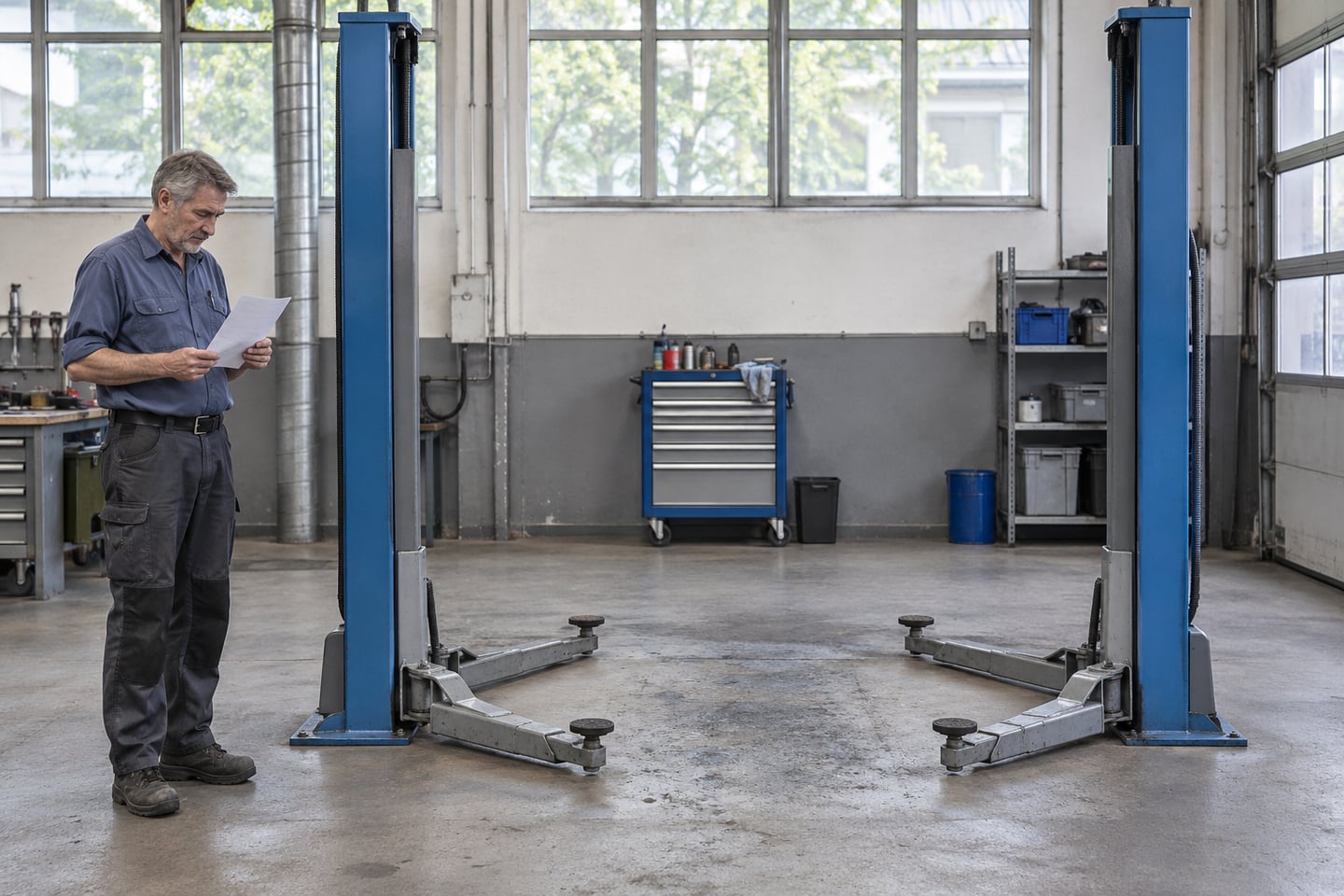
A vehicle servicing lift
A workshop-equipment manufacturer will supply a two-post lift specifically designed to raise vehicles for servicing. Vehicle servicing lifts are listed in Annex I Part A, item 3. Even with a complete standards and test file, the manufacturer needs a notified body. It can compare B followed by C, H and G against its production plans and the body’s actual scope.
A manually fed woodworking circular saw
Consider an industrial circular saw with a blade that stays fixed in position during cutting, a fixed table and manual feeding of the workpiece. Those details match Annex I Part B, item 1.1, on the stated assumptions. Suppose the file uses a category-specific standard, but its applicable coverage stops short of one relevant Annex III requirement. The manufacturer still needs to address that requirement, and Module A is unavailable on that evidence. Its next decision is which notified-body route to use.
A standalone carton-labelling machine
A complete motor-driven label applicator adds adhesive labels to closed cartons. Assume the manufacturer has checked the actual functions and confirmed that no Annex I category applies. Article 25(4) directs it to Module A. The manufacturer still assesses risks, documents the design and controls production. An importer reviewing the file can ask for the basis of the Annex I decision and the applicable declaration.
Read Annex I and Article 25 in the consolidated Regulation. For background on how machine-specific standards fit into the wider framework, see the mechanical and machinery standards guide.
How to verify a notified body before you accept a quote
Search the Commission’s NANDO database under Regulation (EU) 2023/1230. Open the individual notification. Match the legal name, body number, current status, product category and procedure to your quote. If a sales contact is working for a subcontractor, ask which notified legal entity takes responsibility for the assessment and which entity will appear on the certificate or approval. Save a dated copy of the scope you checked. NANDO entries for Regulation (EU) 2023/1230.
A laboratory may supply the test evidence that goes in your technical file. A notification listed for the old Machinery Directive or accreditation for laboratory testing does not establish notification for the Regulation procedure on your quote. The Commission also distinguishes voluntary certificates from the prescribed conformity assessment. European Commission machinery guidance and certificate warning.
What to send with your first assessment enquiry
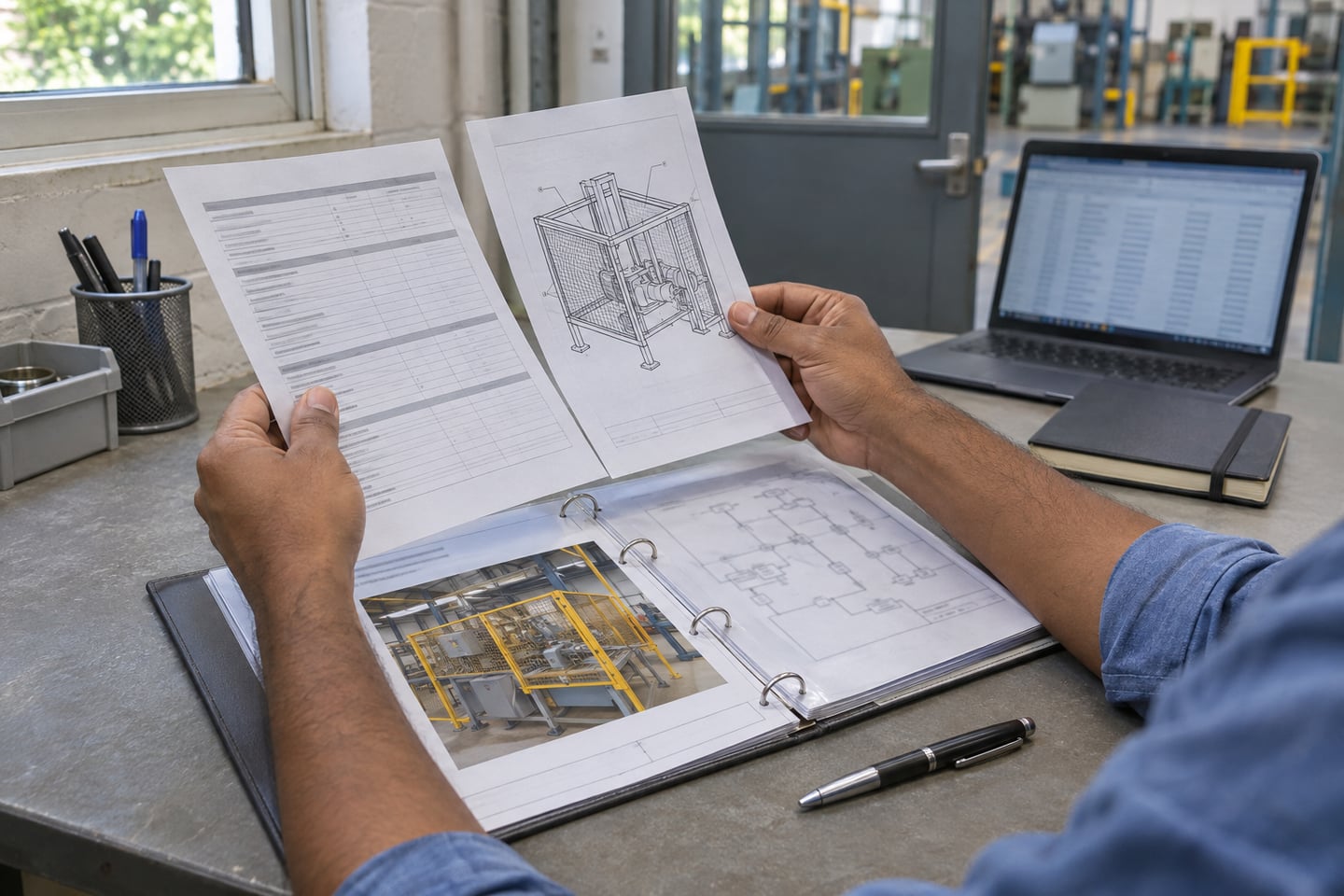
- Legal manufacturer, responsible contact, model, revision, intended use and variants to be included.
- Exact Annex I entry and why it applies, the proposed module, and any part of the classification you still need to clarify.
- Current risk assessment, essential-requirements matrix, standards references, drawings and relevant test evidence.
- Expected production volume, availability of a representative specimen or individual unit, planned market date and any site visits to account for.
- A request for the proposed deliverable, what is included in the quotation, and how changes to the design or variants will be handled.
You can compare preliminary scopes and quotes. If you proceed with Module B, the formal application for the same type goes to one notified body and includes a declaration that it has not been lodged elsewhere. Agree what the body needs before you ship a specimen. Annex VII, point 3.
When you also need a separate laboratory quotation, give the lab the sample details, method and reporting purpose. Prepare a laboratory testing brief.
Common questions before placing machinery on the EU market
Does a purchase order dated before 20 January 2027 settle which law applies?
Check when the individual unit is first placed on the EU market. An order date alone does not establish that event. Article 52 allows machinery lawfully placed under the Directive before the transition to continue being made available. It also keeps qualifying Directive certificates and approval decisions valid until expiry. For a new unit, check the applicable regime, the document’s scope and the evidence for the actual configuration. See the transition guide and the Commission Blue Guide on placing products on the market.
Who signs the EU declaration of conformity?
The manufacturer remains responsible for conformity and draws up the declaration under Article 21 and Annex V Part A. For the notified-body routes specified in Article 24(3), the notified body’s identification number follows the CE marking. This includes B followed by C. The body affixes the number itself or instructs the manufacturer or authorised representative to affix it. Articles 21 and 24 and Annex V.
Do these checks apply to machinery imported from outside the EU?
Use the same EU market and product-category checks for an imported machine. Ask the manufacturer for the evidence supporting its chosen route. The EU importer has its own verification duties under Article 13. If you are also selling into another market, check that destination’s rules separately. European Commission Access2Markets guidance.
Primary sources checked on 18 November 2026. This guide covers ordinary conformity assessment under Article 25. Verify the current legal text, the product configuration and the body’s live notification before committing to an assessment route.